A gentian vs ginger appetite tincture comparison is mainly about formula structure, taste, and label transparency. A gentian-led blend often emphasizes deep bitterness. A ginger-led blend usually emphasizes pungency, warmth, and aromatic flavor. Neither structure guarantees a particular outcome.
This guide explains how to identify each architecture from the Supplement Facts panel and ingredient list. HerbEra is included as one concrete label example, not as evidence that one formula structure produces better results.
What Is the Main Difference Between Gentian-Led and Ginger-Led Blends?
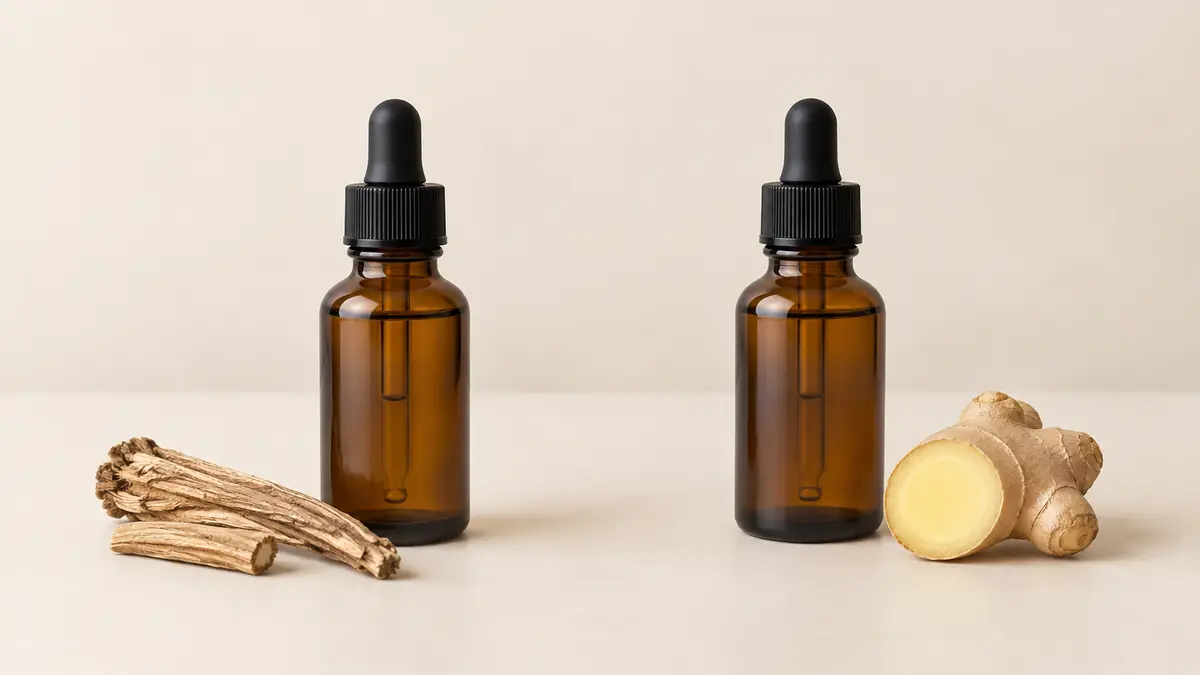
The main difference is the dominant sensory botanical and the ingredients built around it. Gentian root supplies intense, persistent bitterness. Ginger rhizome contributes pungent heat and a recognizable spicy aroma.
| Label feature | Gentian-led formula | Ginger-led formula |
|---|---|---|
| Lead botanical | Gentian root | Ginger rhizome |
| Botanical name | Gentiana lutea | Zingiber officinale |
| Plant part | Root | Rhizome |
| Dominant taste | Strong, lasting bitterness | Pungent, spicy, and aromatic |
| Possible supporting herbs | Centaury, blessed thistle, dandelion, burdock, fennel | Fennel, cardamom, citrus peel, peppermint, cinnamon |
| Main tolerance question | Can the user accept an intense bitter taste? | Can the user accept pungency and warming spice? |
| What the structure does not prove | Greater strength or a better outcome | Greater gentleness or a better outcome |
These are descriptive patterns, not regulated product categories. A formula can contain both herbs, and the front label may not identify which one contributes more to the finished product.
Does the First Botanical Identify the Lead Ingredient?
Sometimes, but the label format matters. Ingredient order can provide useful information only when the applicable labeling rules and declared quantities are understood.
Individually quantified ingredients
A Supplement Facts panel may state an amount for each dietary ingredient. In that case, compare the amount per serving rather than relying only on visual order. Also check whether each amount refers to a raw botanical, dry extract, or liquid extract.
Proprietary blends
In the United States, dietary ingredients within a proprietary blend must be listed in descending order of predominance by weight. The first ingredient contributes more weight than the ingredients that follow, but the label may disclose only the total blend weight.
Weight order does not reveal sensory intensity. A small quantity of a highly bitter or pungent botanical may have a noticeable effect on taste.
Marketing lists
A list on the front panel or product page may highlight ingredients for presentation rather than provide a complete quantitative hierarchy. Confirm the order against the physical Supplement Facts panel before calling a product gentian-led or ginger-led.
Other ingredients
Alcohol, water, glycerin, flavors, and sweeteners may appear in a separate ingredient statement. Their order should not be confused with the order of dietary ingredients inside a botanical blend.
What Defines a Gentian-Led Formula?
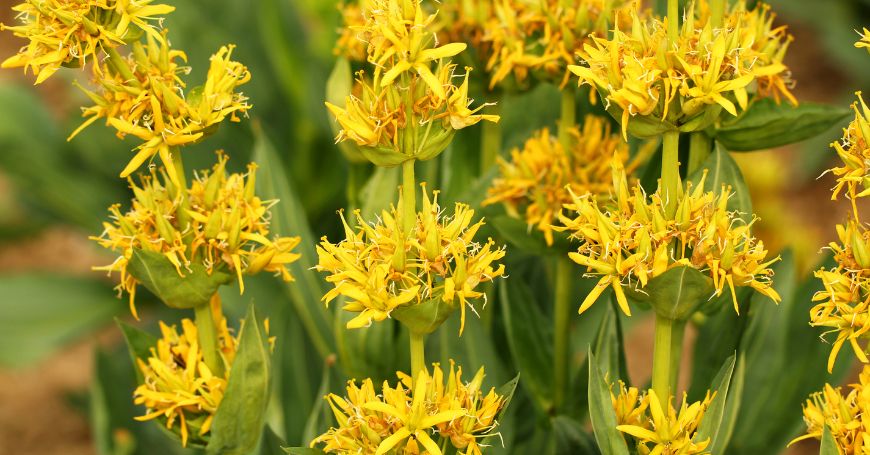
A gentian-led formula places Gentiana lutea root in a leading or clearly prominent position. The root has a concentrated bitter profile that can remain noticeable even when the formula includes sweeter or more aromatic plants.
Supporting ingredients often modify the sensory experience. Fennel can add a sweet aromatic note. Cayenne adds heat. Dandelion root contributes earthy bitterness, while burdock root has a milder earthy character. Centaury and blessed thistle can extend the bitter profile.
The presence of several bitter botanicals does not establish that the formula is more effective, more complete, or suitable for every user. It shows that the product developer chose a layered bitter architecture.
A clear gentian label should identify the species and root as the plant part. It should also state the amount per serving or explain that the herb belongs to a proprietary blend.
What Defines a Ginger-Led Formula?
A ginger-led formula places Zingiber officinale rhizome first or gives it the largest disclosed amount among the main botanicals. Its sensory profile is spicy, aromatic, and warming rather than purely bitter.
Ginger-led blends may use fennel, cardamom, cinnamon, citrus peel, or peppermint to build a broader aromatic profile. Some also contain gentian, centaury, dandelion, or another bitter herb in a secondary position.
The word «ginger» alone does not show whether the product uses ground rhizome, a dry extract, or a liquid extract. These preparations should not be compared only by milligram numbers. Extract concentration, solvent, serving size, and source material can differ.
A ginger-first ingredient list also does not prove that the finished liquid tastes mild. Cayenne, black pepper, concentrated ginger extracts, or aromatic oils may increase perceived heat.
What Does a Real Gentian-Led Label Look Like?
A practical example should be read from the ingredient sequence rather than inferred from the product name. HerbEra’s published formula presents a gentian-first botanical dropper blend containing gentian root, burdock root, fennel seed, dandelion root, centaury herb, dandelion leaf, cayenne pepper, and blessed thistle leaf.
This is an eight-botanical formula. It contains no ginger and no wormwood. Its architecture combines intense bitter herbs, earthy roots, an aromatic seed, and cayenne heat.
The ingredient list supports describing the formula as gentian-first. It does not disclose enough information by itself to calculate the contribution of each botanical. The physical label should be checked for individual amounts, total blend weight, serving size, and extraction details.
How Can Taste Be Predicted From the Label?
The lead botanical provides a starting point, but the full formula determines the finished taste. Solvent, concentration, sweeteners, serving size, and supporting herbs can change the sensory profile.
Bitterness
Gentian, centaury, blessed thistle, and dandelion can contribute different forms of bitterness. Multiple bitter ingredients may create a broader and more persistent taste than one botanical alone.
Pungency
Ginger and cayenne both add heat, but they do not taste identical. Ginger is aromatic and spicy. Cayenne provides sharper chili heat. A gentian-led formula containing cayenne can therefore be both intensely bitter and pungent.
Aromatic balance
Fennel, citrus peel, cardamom, cinnamon, and peppermint can soften or redirect the perceived profile. They do not remove the underlying bitter or spicy compounds.
Sweetness
Glycerin, sugar, syrup, or sweet flavoring can make a formula easier to taste. Sweetness does not show whether the product is gentian-led or ginger-led, and it does not establish the concentration of the botanical extracts.
Does the Extraction Base Change the Comparison?
Yes. The extraction base affects flavor, label suitability, and storage instructions. It does not provide automatic evidence that one product works faster or produces a stronger result.
| Extraction detail | What to check | Why it matters for comparison |
|---|---|---|
| Alcohol and water | Alcohol declaration and extract ratio | May create a sharper taste and may not suit users avoiding alcohol |
| Glycerin and water | Glycerin source, sweetness, and storage directions | Usually tastes sweeter but remains a distinct extract format |
| Dry extract in liquid | Extract amount, ratio, and carrier | The listed milligrams may describe extract rather than original herb |
| Unspecified base | Supplement Facts and other ingredients | Missing solvent information limits a meaningful comparison |
Two products with the same lead herb may use different herb-to-liquid ratios. Equal dropper volumes therefore do not prove equal amounts of source botanical or comparable sensory intensity.
How Should Disclosed Amounts Be Compared?
Compare amounts only after identifying what each number represents. A whole botanical, concentrated extract, and total proprietary blend are different declarations.
- Amount per serving: The quantity provided by the labeled serving, not necessarily by one dropper.
- Extract ratio: A manufacturing relationship between source material and extract. It is not a direct score of product strength.
- Proprietary blend total: The combined weight of the blend, not the amount of each listed herb.
- Herb equivalent: An estimate of source botanical represented by an extract, when clearly defined by the manufacturer.
- Liquid volume: The volume of finished extract. It should not be compared directly with the weight of a powder.
If one label gives individual quantities and another provides only a total blend amount, the first label supports a more detailed comparison. Do not fill disclosure gaps with assumptions.
Checklist for Choosing Between Gentian-Led and Ginger-Led Blends
Use this checklist to compare formula architecture without relying on front-label language. It focuses on verifiable composition, taste, and format details.
Find the first dietary botanical
Read the Supplement Facts panel or proprietary blend list. Do not rely only on ingredients highlighted on the front panel.
Confirm the species
Look for Gentiana lutea for gentian and Zingiber officinale for ginger.
Check the plant part
Gentian products should identify the root. Ginger products should identify the rhizome.
Review the supporting herbs
Note additional bitter, aromatic, sweet, or pungent ingredients that may change the finished taste.
Look for cayenne
A gentian-led blend can still feel hot if cayenne appears in the formula. Do not equate ginger-free with spice-free.
Compare declared amounts
Separate individual quantities from total proprietary blend weight. Record missing quantities as undisclosed.
Identify the extraction base
Check for alcohol, water, glycerin, or another carrier. Choose according to label preferences and practical restrictions.
Read the serving directions
Compare drops, droppers, and milliliters only after confirming the amount represented by each serving.
What Safety Details Should Be Checked?
Review every botanical rather than screening only the lead ingredient. Multi-herb tinctures may contain plants, spices, solvents, or carriers that create individual suitability concerns.
Check the warning statement if you use medication, are preparing for surgery, are pregnant or breastfeeding, or are selecting a product for a child. People avoiding alcohol should verify the extraction base rather than relying on the word «tincture.»
Stop using a product if it causes an unexpected reaction and seek appropriate professional guidance. A persistent or unexplained change in appetite also warrants qualified evaluation instead of relying only on a supplement label.
FAQ
Is gentian the same as ginger?
No. Gentian is Gentiana lutea root, while ginger is Zingiber officinale rhizome. They have different botanical identities and taste profiles.
Is a gentian-led tincture always more bitter?
Not always. Concentration, serving size, sweeteners, and supporting herbs affect the finished taste.
Can a ginger-led formula also contain gentian?
Yes. Ginger may appear first while gentian appears later as a supporting bitter ingredient.
Does ginger-free mean spice-free?
No. Cayenne, black pepper, cinnamon, or other pungent ingredients can add heat without ginger.
Does the first ingredient always have the highest amount?
It does within a properly declared proprietary blend listed by weight, but other label formats may provide individual amounts or use separate ingredient sections.
Is an alcohol-free glycerite weaker than an alcohol tincture?
The solvent alone does not establish comparative strength. Check the extract specification, serving size, and botanical quantities.
Does a longer ingredient list mean a better formula?
No. More ingredients create a more complex formula but do not establish better quality, suitability, or results.
Glossary
Gentian root
The root of Gentiana lutea, known for an intense bitter taste.
Ginger rhizome
The underground stem of Zingiber officinale, recognized by its pungent and aromatic profile.
Lead botanical
The plant given the most prominent position by disclosed amount or applicable ingredient order.
Proprietary blend
A mixture that declares its total weight while individual ingredient quantities may remain undisclosed.
Extract ratio
A manufacturing ratio describing the relationship between botanical material and finished extract.
Rhizome
An underground plant stem. Ginger is commonly labeled by this plant part.
Pungency
The sharp, warming, or hot sensory quality associated with ingredients such as ginger or cayenne.
Glycerite
A liquid botanical extract that uses glycerin, usually with water, instead of an alcohol-based solvent.
Amount per serving
The quantity supplied by the serving defined on the product label.
Conclusion
A gentian-led blend emphasizes deep bitterness, while a ginger-led blend emphasizes pungent aromatic character. Choose by reading botanical order, disclosed amounts, supporting ingredients, extraction base, and serving details rather than assuming that either architecture is inherently better.
Sources Used
FDA Dietary Supplement Labeling Guide, Nutrition Labeling — fda.gov/food/dietary-supplements-guidance-documents-regulatory-information/dietary-supplement-labeling-guide-chapter-iv-nutrition-labeling
FDA Dietary Supplement Labeling Guide, Ingredient Labeling — fda.gov/food/dietary-supplements-guidance-documents-regulatory-information/dietary-supplement-labeling-guide-chapter-v-ingredient-labeling
European Medicines Agency overview of Gentiana lutea root — ema.europa.eu/en/medicines/herbal/gentianae-radix
FDA Questions and Answers on Dietary Supplements — fda.gov/food/information-consumers-using-dietary-supplements/questions-and-answers-dietary-supplements
European Medicines Agency overview of Zingiber officinale rhizome — ema.europa.eu/en/medicines/herbal/zingiberis-rhizoma